I am a subscriber to the New York State Department of Environment Conservation’s magazine, “Conservationist”. This past fall they released an article talking about this years deer harvest. This year’s current campaign is, “Let young bucks go and watch them grow”. I am a science teacher. My undergraduate studies included a Bachelor’s Degree in Biology, with a heavy focus in Ecology. For the average hunter, they are able to recognize the ecology of their area rather well. They can give you a summarization of the population of the area, doe:buck ratios, how many fawns they’ve seen and so on. They can even tell you where most of the deer are located based on their food source. As a hunter gains knowledge of their game, they develop a good sense of when to let something walk, and when to take their game. However, this for some is not the case.
Hunter’s in New York have a tendency to mainly claim to be “meat” hunters. They claim to not give thought to the size of the rack of an individual and strictly care about “filling their freezer”. This is a contradiction, if they paid attention to antler size, they would most likely fill their freezer with more meat. Larger mature deer yield more meat than a immature 1.5-2.5 year old buck. There are very few Pope and Young/ Boone and Crockett bucks that were taken in New York. Hunter’s are not the main reason for that.
The DEC needs to do a better job of managing it’s deer herds. New York is a very heavily wooded landscape. Deer generally feed in open fields on protein rich foods, such as soy, corn, etc. Mainly why you find larger deer near farm land. They have a greater more nutritious food source. As a state, we have a lot of female deer. In some areas, they are very densely populated, especially in some of the Norther areas. This creates a problem of space. Something all organisms need to survive. Lack of space causes a decrease in the survivability of fawns. Fawns, that may be at one point a large male buck. Food is a major area of concern I have with the current deer population. Most deer live in what is considered and “Old Hardwood” forest. This means that most of the trees in an area are “old”. Very few samplings survive long enough to grow to a mature plant. This is due to increased deer herds in an area. The deer eat the samplings because they contain a lot of nutrition they need. Especially in Northern New York. Southern New York, on average has larger male deer populations, due to the abundance of farm land with more nutritional food sources.
I am not saying we need to start cutting down our trees and making more farm land. What I am saying is, we need to try and knock down the female deer population. Currently, there is a lottery for female deer in New York state during rifle season. Some areas with the highest female deer populations, do not have tags available for female deer. The DEC needs to provide more female deer tags in areas with a lot of female deer. I think in some areas, there should be a lottery on bucks, to help get the population back on track. The DEC needs to start having check in stations for game and get a better idea of the deer being taken. Currently you report the harvest online, which is convenient, but not necessarily efficient at collecting data. Population ecology needs to be done in the field observing what is going on.
Another major issue fawns face in New York state are coyotes. There are increasing numbers of coyotes in New York state. Not a lot of people predator hunt in New York state. This is something that needs to be done. Adult deer do not have any natural predators in New York state anymore. While you may have the occasional coyote take an adult deer, with some help (disease, injury, etc.), they mainly target fawns. Why? it’s easier and reduces the risk of a life threatening injury.
Our state needs to start modeling itself after states that are doing it better. Think of the states where bucks are in large numbers and are large in size; Iowa, Kansas, Ohio, Kentucky, Missouri, Illinois, Nebraska, the Dakotas. All these places take their game management very seriously. They have implemented practices that provide their herds with nutrition, ability to reproduce etc. I look at it as the “if it ain’t broke, don’t fix it” mantra. These states are doing it and doing it better than we are. The DEC asks hunters to do their part, but they need to do theirs as well. Hunting is a multi-billion dollar a year industry. Something these states have cashed in on. I have not heard one person in my travels say “I want to go hunt in New York someday”. Which is sad, because we have a beautiful state. We just need to manage it better.
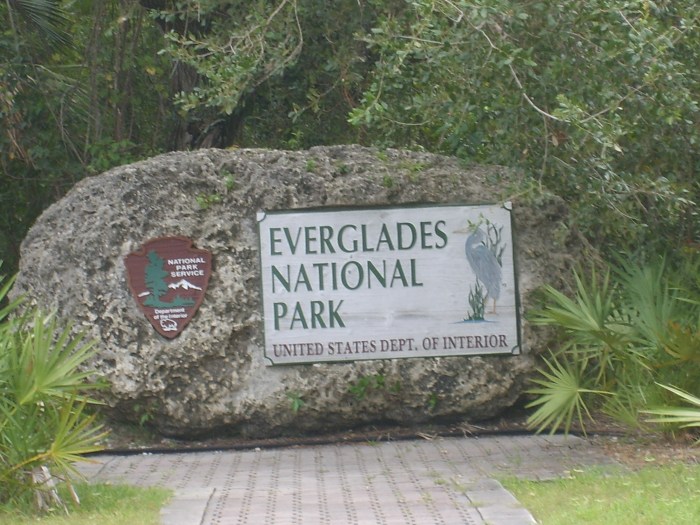 For those who aren’t aware, the Everglades and it’s surrounding waters are in danger of being extremely polluted (Though they already are quite polluted) and the Everglades themselves being greatly reduced. There are two ways to look at the growing problem in the Everglades and it’s surrounding coastal waters. 1st, the quality of the water entering and leaving the Everglades. 2nd, the quantity of water entering and leaving the Everglades. Let’s talk about water quality first. Pollution of the Glades and surrounding coastal waters happens from agricultural runoff that is dumped into lake Okeechobee. When the lake floods, the water overflows and drains eventually reaching Everglades further down into the Keys. This runoff brings and unhealthy abundance of nutrients, such as phosphorus, toxic sulfides and nitrogen. Which in turn causes dangerous algal blooms and kills resident plant life. These algal blooms can choke out the waters fish, amphibians, native reptiles, insects and so on. Also, the flow of the rivers and other bodies of water has been altered so much, that the Everglades is actually shrinking. It is not receiving the runoff it once did, at least not in the volume it did. What runoff it does receive is polluted by agricultural fertilizers and other chemicals. Now, lets talk about quantity. The Everglades was covering almost 3 million acres. That number has been greatly reduced; about half the original size to be exact (www.evergladesfoundation.org).
 Reff Water Fly Fishing LLC